

radiationresearch.org home
Home

Welcome to the EM Radiation Research Trust

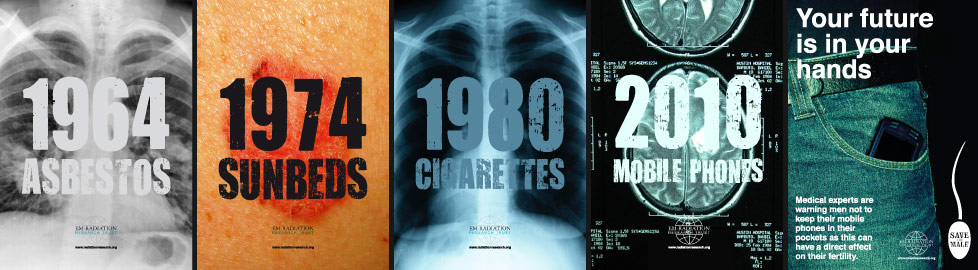
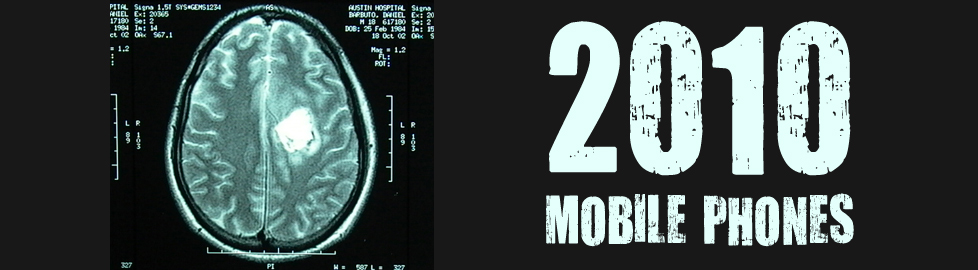
Do mobile phones, mobile phone masts and even domestic appliances, electricity pylons and desk top computers pose a health risk?

This is an important issue but one that has been repeatedly misunderstood and misreported. The purpose of this web site - and of the EM Radiation Research Trust itself - is to turn that situation around, to uncover and communicate the facts concerning electro-magnetic radiation and our health.

What do we do?

  • Explain what is an often confused issue in an understandable way and make the past and current evidence available to the public and the media
  • Lobby the U.K. Government and the E.U. to fund and prioritise the research effort
  • Campaign for law and policy change based on proven science
  • For more independent research into health aspects of mast emissions including a study of a cancer cluster adjacent to a mast site - Oberfeld model
  • To implement the APMG report with the establishing of a truly independent standard setting body advising on EM emission levels and direction of beams of greatest intensity and potential sensitive sites such as schools, etc.


Get the free Adobe Acrobat Reader

Urgent Issues
Read the latest newsletter online here + Aims for 2008

The RRT has just issued a well received leaflet on "Precautionary Approach to Wireless Communication"

This followed the issue of the BioInitiative Report: A Rationale for a Biologically-based Public Exposure Standard for Electromagnetic Fields (ELF and RF) 31st August 2007. www.bioinitiative.org

An international working group of renowned scientists, researchers and public health policy professionals (The BioInitiative Working Group) has released its report on electromagnetic fields (EMFs) and health.

After reviewing over 2000 research publications scientists raise concerns about the safety of existing public limits that regulate how much EMF is allowable from power lines, mobile phones, and many other sources of EMF exposure in daily life.

The report documents scientific evidence raising worries about health impacts including childhood leukemia (from power lines and other electrical exposures), brain tumors and acoustic neuromas (from mobile phones and cordless phones) and Alzheimers disease. There is evidence that EMFs area risk factor for both childhood and adult cancers.

Public health expert and co-editor of the Report, Dr David O Carpenter, Director, Institute for Health and the Environment at the University of Albany, New York states: "This report stands as a wake-up call that long-term exposure to some kinds of EMFs may cause serious health effects. Good public health planning is needed now to prevent cancers and neurological diseases linked to exposure to power lines and other sources of EMFs. We need to educate the public and our decision makers that business as usual is unacceptable."

The Handheld Learning Conference / Dr Mike Repacholi

The leaflet was launched to delegates at the Handheld Learning Conference held in Westminster on 11th and 12th October 2007 where Trustees Michael Bell and Eileen O’Connor had a 2 hour meeting with Dr Mike Repacholi, ex WHO chief who gave delegates a key note presentation to the effect that electromagnetic radiation was not an immediate problem.

He did acknowledge to the Trust and the conference in answer to questions from the Trust that research expenditure was particularly inadequate given the current levels of concern.

He initially expressed to us a hope that he could help facilitate funding for research particularly on the challenge of Electrohypersensitivity.

He also acknowledged to us that it was time for a review of the ICNIRP standards from their 1998 levels.

Inadequate 10 year old ICNIRP Guidelines

On 27th November - Eileen O’Connor presented her personal story at the Emergency Conference on Human Health in an Electro-technological World. The event was sponsored by Roger Coghill and was hosted at the Royal Society, London.

A resolution was proposed in favour of an urgent review of the present ICNIRP guidelines which scientists and other delegates considered to be out of date and not reflective of the huge spread of the new technologies in the last 10 years.

Copy of Eileen’s presentation

along with co-presenters;

Roger Coghill
Dr Lennart Hardell
Professor Olle Johansson
Dr Gerd Oberfeld
Cindy Sage
Dr Robert Verkerk
Dr John Walker
Nancy Watts

The Conference was followed at Westminster on 28th November by a meeting to discuss possible current research projects including WIFI to see if advantage could be taken of the HPA research and MTHR 2 programmes as well as possible WHO / European funding.

The RRT is calling for a review of WiFi / Wireless devices - more info.

Article: The Truth About Mobile Phones and Wi-Fi

Canadian Human Rights Commission -Policy on Environmental Sensitivities

Many thanks to Dr Magda Havas of Trent University, who was happy to supply the following links to expand on the Canadian ES update.

http://www.agoracosmopolitan.com/home/Frontpage/2008/02/01/02182.htmlhttp://www.agoracosmopolitan.com/home/Frontpage/2008/02/11/02216.html
http://www.chrc-ccdp.ca/legislation_policies/policy_environ_politique-en.asp

Canadian Human Rights Commission
www.chrc-ccdp.ca

Policy on Environmental Sensitivities

Individuals with environmental sensitivities experience a variety of adverse reactions to environmental agents at concentrations well below those that might affect the “average person”. This medical condition is a disability and those living with environmental sensitivities  are entitled to the protection of the Canadian Human Rights Act, which prohibits discrimination on the basis of disability. The Canadian Human Rights Commission will receive any inquiry and process any complaint from any person who believes that he or she has been discriminated against because of an environmental sensitivity. Like others with a disability, those with environmental sensitivities are required by law to be accommodated.

The CHRC encourages employers and service providers to proactively address issues of accommodation by ensuring that their workplaces and facilities are accessible for persons with a wide range of disabilities.

Successful accommodation for persons with environmental sensitivities requires innovative strategies to minimize or eliminate exposure to triggers in the environment. These may include: developing and enforcing fragrance free and chemical avoidance policies, undertaking educational programs to increase voluntary compliance with such policies, minimizing chemical use and purchasing less toxic products, and notifying employees and clients in advance of construction, re-modeling and cleaning activities. Such measures can prevent injuries and illnesses, and reduce costs and health and safety risks.

For further information on environmental sensitivities, click on the following Commission publications:

The Medical Perspective on Environmental Sensitivities

Accommodation for Environmental Sensitivities: Legal Perspective

Policy approved by the Commission on June 15, 2007.

http://www.chrc-ccdp.ca/research_program_recherche/esensitivities_hypersensibilitee/toc_tdm-en.asp


The Medical Perspective on Environmental Sensitivities

By: Margaret E. Sears (M.Eng., Ph.D.), 2007 

Abstract

Approximately 3% of Canadians have been diagnosed with environmental sensitivities, and many more are somewhat sensitive to traces of chemicals and/or electromagnetic phenomena in the environment. People experience neurological and numerous other symptoms, and avoidance of triggers is an essential step to regaining health. The Canadian Human Rights Commission commissioned this report to summarize scientific information about environmental sensitivities. For those interested in the original scientific and technical literature, an annotated bibliography is available on request from environmentalhealthmed@gmail.com This report addresses issues such as the definition and prevalence of environmental sensitivities; recognition by medical authorities; education and training within the medical community; origins, triggers and symptoms of sensitivities; impact of environmental sensitivities in the workplace; government policies and standards for building codes, air quality and ventilation as they affect individuals with environmental sensitivities; and guidelines for accommodation within the workplace. For people with environmental sensitivities, their health and ability to work rests with the actions of others, including building managers, co-workers and clients. Accommodating people with environmental sensitivities presents an opportunity to improve workplace environmental quality and workers’ performance, and may help prevent the onset of sensitivities in others.

http://www.chrc-ccdp.ca/research_program_recherche/esensitivities_legal_hypersensibilitee/toc_tdm-en.asp 

Accommodation for Environmental Sensitivities:  Legal Perspective

By: Cara Wilkie and David Baker, 2007

Abstract

Environmental sensitivities are a group of poorly understood medical conditions that cause people to react adversely to environmental triggers. The Canadian Human Rights Commission commissioned this report, in which the researchers seek to establish the status of the issues related to environmental sensitivities from a legal perspective and as these relate to the protection of human rights. The researchers examined case law, consulted experts and examined secondary sources on accommodation of people with environmental sensitivities in Canada, the United States, Australia, New Zealand and the United Kingdom, in order to answer several questions in the Canadian context: What is the status of the case law in these jurisdictions? Do building codes act as barriers to people with environmental sensitivities? What best practices emerge from the case law? How are conflicting interests reconciled? How can third parties be involved in the accommodation process? Where is the threshold of undue hardship? How are conflicts regarding accommodation preferences resolved?

Research:

Precautionary approach to wireless communications

*NEW* Israeli Study The latest research from Israel on "Celluar Phone Use and Risk of Benign and Malignant Parotid Gland Tumors – A Nationwide Case-Control Study" in the December edition of The American Journal of Epidemiology does not allay these concerns. When no less an authority as Dr Mike Repacholi confirms to the Trust and educationalists that research funding is inadequate, it is time for some action.

The Safe Wireless Initiative Health Study

The Biological Effects of Weak Electromagnetic Fields - Dr Goldsworthy, Honorary Lecturer in Biology at Imperial College London, Bio Here.

Transcript of the recent BBC Panorama program on wireless networks- here.

Note: Dr Repacholi’s complaint that the balance of the Panorama programme was not correct was upheld in that it lacked another supporter of his stance but the scientific content was upheld.

Cancer clusters at phone masts. Daniel Foggo The Sunday Times 22/04/07

WIFI / WLAN - Just gone mobile or about to? Read here first....

Minutes for the EMF Discussion Group Meeting - 11th September 2007

Please note that the EMF Discussion Group (EMF DG)

Minutes of the last meeting on 11th September 2007 are now on the Health Protection Agency/Radiation website. You will find some important information enclosed in the minutes including that from Dr Rick Saunders ex WHO on the ICNIRP standards. Copy of the Minutes Here


Latest news & developements:

Learning zone

So what is electro-magnetic radiation? Your questions answered.

Interactive

Want to know how close you live to a mobile phone base station?

Press centre

Latest news from the RRT and further afield.

Latest research

Recent research findings and an archive of research summaries on mobile phone radiation and more…

Our supporters

MP’s, MEP, leading acedemics, doctors; as well as ordinary people affected by EM radiation are all joining us.

Home | About | Press centre | Learning zone | Interactive | Latest research | Our supporters
The EM Radiation Research Trust is an educational organisation funded by donations. An independent Charity Registered No. 1106304
© The EM Radiation Research Trust 2003-2004